




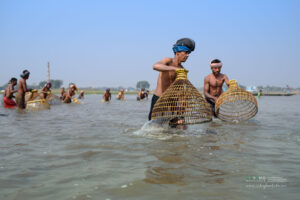
In Bangladesh, traditional fishing is woven into the rhythm of daily life along the country’s vast network of rivers, canals, Beels and coastal mangroves, where generations have honed simple yet effective techniques that echo the land’s seasonal pulse.
Local fishermen use various methods passed down through generations, including cast net fishing (jhaki jal), where circular weighted nets are skillfully thrown into the water to catch fish. Gill nets and seine nets are commonly used in rivers and coastal areas to trap fish of different sizes. Another unique method is katha fishing, where fishermen create artificial shelters using tree branches and bamboo to attract fish. In some regions, trained otters are used to herd fish into waiting nets, a centuries-old practice that showcases the bond between humans and animals. Traditional bamboo traps called “polo” are also widely used in shallow waters and floodplains to catch fish during monsoon season.
These traditional fishing methods remain an important part of Bangladesh’s cultural identity and continue to support the livelihoods of millions of fishing communities across the country.
Each fishing style reflects a deep respect for the water’s cycles and a sustainable relationship that has sustained both people and ecosystems for centuries.